BMW Z4 Roadster Black with Black Leather

BMW Z4 3.0i Convertible, black with black interior. This vehicle is nicely equipped with heated seats, automatic transmission.

Beware the Bandwagon: Android Attracting More Apps than iOS

Android has been dominating mobile industry news cycles this week with the release of ABI Research’s report on smartphone app downloads...

Combine Routine and Dynamite Products for Back-To-School Health

This proprietary formula of targeted minerals assists a person’s immune system to build, repair, and stabilize itself. It consists of zinc, copper, selenium.

download the computer program

You can download such note, assignment, software and anything in 'download'

IBM Smarter Computing Blog

Cloud, analytics and mobile aren’t just changing the way you compute, they’re changing the way you do business with customers.

Welcome to our website. The Best Global Products.

We at Global Products would like to welcome you to our newly redesigned website. We have taken great care to update and improve all of the information on this site and will continue to work aggressively on updating the site to keep you better informed about Global Products and to provide essential information in an easy to use way

.would enjoy hearing your feedback on the new site and take any suggestions you may have. Visit our website feedback form to tell us how we’re doing! At the same time, we invite you to interact with us at various social media sites. We are now on Facebook, LinkedIn, Twitter and YouTube!
Showing posts with label Computer Hardware. Show all posts

Thursday, 4 August 2016

Smartron t.book review: An affordable Surface-like 2-in-1, but comes with its quirks

A small startup from Hyderabad called Smartron started operations in 2014 with ambitious plans. The company came into limelight after the announcement that Sachin Tendulkar was an investor in the company and would act as its brand ambassador. Soon after the announcement, Smartron pivoted to promoting itself as an Indian IoT (Internet of Things) company. Aiming to differentiate itself from the crowd of generic device makers, Smartron decided to launch a 2-in-1 device – the Smartron t.book.
This is the first device from the company as part of its plans to create an exhaustive ecosystem of devices leveraging IoT. Despite the aim, the company, for now, is concentrating on conventional computing devices that will target the general consumer market. Soon after the launch of t.book, Smartron sent us one of the devices, and we have been using and testing it extensively. Let us see how the first device from this relatively new startup performs in the real world.
Build and Design: 7.5/10
tbook (5)
The first thing you notice when you open the Smartron t.book is the fact that the device is premium. It doesn’t look like any other 2-in-1 which may seem flimsy and barely worth investing money in. The magnesium-alloy body feels sturdy and has a good finish, though the orange colour may be distracting for some. Despite the premium quality the device feels significantly heavy and not suitable for prolonged usage in tablet mode, though you get accustomed to the weight. But the entire concept of 2-in-1 devices is to be portable and lightweight to use in the tablet configuration.
tbook (9)
The keyboard feels great and keys are built for extended usage. The kickstand at the back is useful but does not provide that much flexibility as compared to the Surface Pro 4. Beyond a point, the kickstand looks slightly delicate, but there is nothing to worry on that front. One thing to mention specifically is that the charging cable is good; it does not look delicate like the Surface Pro 3 charging cable.
tbook (13)
The design of the device with the speaker grill on top with the front camera in the middle give it a retro look. The capacitive button on the right side of the display works as intended and you can use the tablet in landscape mode. Landscape mode works well for reading, making notes or general word processing. Overall, there isn’t much to complain in terms of the build quality of the tablet portion, at least.
Keyboard and Trackpad: 6/10
tbook (6)
Smartron t.book offers a detachable 6-row chiclet keyboard. Typing is a breeze with the keys giving an excellent tactile feedback. I was surprised with the quality of the material used for making the keyboard and the trackpad. But one must beware of the fact that the keyboard has a proclivity to flex a slight bit when you’re typing really fast around the periphery and the t.book is on a flat surface. Lappability is not its strongest feature and the keyboard tends to wobble when typing. It is preferable to have the t.book on a flat surface while typing.
The magnetic connector to connect the keyboard with the t.book was not up to the mark. Sometimes you had to attach the keyboard manually instead of the automatic lock on at some occasions. The area between the magnetic connector and the actual keyboard was a bit delicate. It is worth mentioning that when the keyboard is closed, it latched on to the t.book securing the screen in any orientation.
tbook (22)
Coming to the trackpad on the keyboard that comes with the t.book, there’s only one thing to say, it is poorly implemented. Out of the box, settings make it seem sluggish and after tweaking the mouse pointer speed, there is still no improvement. The size of the trackpad is really small and it is oversensitive in terms of applied pressure. During the review, it continued to register ghost touches and made usage a pain. Scrolling down a webpage for instance would end up minimising it, selecting text would at times end up moving around the browser window and so on. You are better off using a dedicated wireless mouse while using it.
tbook (23)

Monday, 1 August 2016

Now Lenovo has a 13-inch 'Air' laptop, too

Another day, another laptop named
A new trend seems to be rising among Chinese manufacturers, and it's an odd one at that. While rumors chalk off Apple's MacBook Air as dead (the reasoning being that it's been all but replaced by the company's new ultra-thin MacBook) a crop of new ultraportables with "Air" in their names are showing up in China. 
A few days ago, it was Xiaomi's Mi Notebook Air; on Thursday, Lenovo  launched the Lenovo Air 13 Pro, a 13-inch, Windows 10-based ultraportable with a dedicated graphics chip. 
The Lenovo Air 13 Pro has a 13.3-inch full HD screen, an Intel Core i5 or i7 (Skylake) processor, 4GB of RAM, 256GB/512GB of SSD storage and Nvidia's GeForce GTX940MX graphics chip.

It sounds like a dead ringer for Xiaomi's 13-inch offering, but there are differences. The Lenovo starts with less RAM — 4GB vs. 8GB — but it comes with a fingerprint sensor, and it has a more powerful graphics chip (2GB of RAM vs 1GB). The price of the two (at least during Lenovo's pre-order period) is the same: RMB 4,999, or roughly $750.

That price will go up when the device hits stores. The least expensive version, with 4GB of RAM, a 256GB SSD and an Intel Core i5 processor will cost RMB 5,499 ($827). The variant with the same SSD but with a Core i7 processor and 8GB of RAM will go for RMB 6,299 ($947); if you want a 512GB on top of that, you'll have to pay RMB 6,999 ($1052).

In terms of design, the Air 13 Pro doesn't stray too far from today's standards, with a black keyboard on a gold or silver body and a subdued company logo on the lid. It weighs 2.84 pounds and has a 0.58-inch thick body — exactly like Xiaomi's Mi Notebook Air, and somewhere in-between Apple's MacBook and MacBook Air. 
As far as ports go, we've counted 2 USB 3.0 ports, a USB Type-C port, a memory card reader and a headphone jack.
Lenovo's ultraportable is aimed for the Chinese market. Availability in other countries has not been announced. 

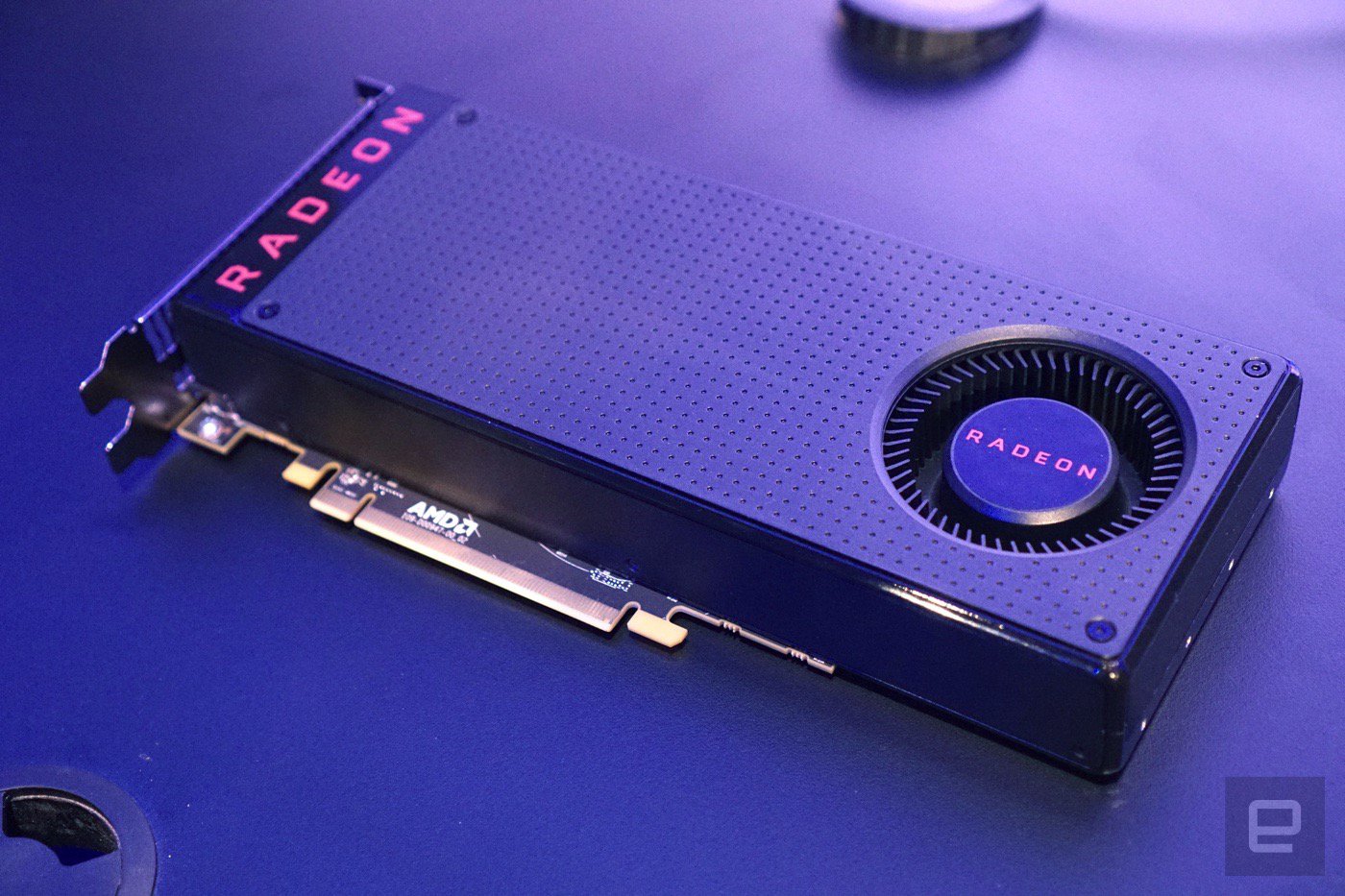
AMD's sub-$200 gaming video cards launch in early Augus


AMD said that the Radeon RX 480 would be followed up by lower-cost models this summer, and it's acting on that promise in a timely fashion. Both the RX 470 and RX 460 (not pictured above) are now slated to arrive on August 4th and August 8th respectively. While AMD hasn't outlined the specific pricing, these newer boards should cost significantly less than the $199 RX 480 -- the RX 460 should sit closer to the coveted $100 mark.
The imminent launch is also shedding some light on details of the cards themselves. The RX 470 may not be VR-friendly like its more advanced sibling, but it's surprisingly close. You can expect up to 4.9 teraflops of computing power (versus 5.8 for the RX 480), and you're still getting 4GB of RAM on a healthy 256-bit memory interface. Think of it as the "good enough" card -- you can play many new games at 60 frames per second, just at 1080p instead of 1440p.
The RX 460, meanwhile, is really a budget counterpart to last year's Radeon R9 Nano. It's much less powerful than the other RX cards (just 2.2 teraflops) and starts with 2GB of RAM on a 128-bit interface, but it's also far smaller and more power-efficient -- it uses less than 75W. The desktop card is ostensibly aimed at eSports gamers who only need brisk frame rates in titles like Overwatch or Rocket League, but it's also built for small form factor desktops and even laptops.
Both cards help fill out an AMD strategy that's very different than in past years. Rather than take NVIDIA head-on in the graphics arena, it's trying to carve out a niche by offering a lot of bang for the buck. This is partly dictated by its own limitations (NVIDIA has generally led the high end for a while), but it could pay off if it gives AMD a relatively uncontested audience. Mind you, NVIDIA's newer graphics technology is becomingincreasingly affordable -- it's entirely possible that the green team will encroach on AMD's turf.

SMS two-factor authentication isn't being banne


Another week gone by, and the place is in cybersecurity shambles again. A years' old hacking issue, unencrypted wireless keyboards, being featured in an upcoming Defcon talk mystifyingly became a hot new Internet of Things threat. Obama gave us a colorful "threat level" cyber-thermometer that no one's really sure what to do with. Ransomware is hitting hospitals like there's a fire sale on money. And the DNC-Wikileaks email debacleexploded, splattering blame all over Russia.
Just when I thought I'd picked the wrong week to stop sniffing glue, a U.S. National Institute for Standards and Technology (NIST) report came out that included recommendations about the inherent risks in two-factor authentication, upon which the tech press basically lost their minds and told everyone to assume crash positions because the password sky was falling. Again.
What actually happened was, the NIST released the newest draft version of its Digital Authentication Guidelines. In its public preview, the agency included language that hinted at the depreciation of SMS-based Two-Factor Authentication (2FA) because, basically, phone numbers can be hijacked, and SMS can be intercepted -- making the NIST impetus sensible for government employees or those dealing with sensitive medical information or state-level secrets.
But for normal people, 2FA is still going to limit the ability of an attacker to intercept or alter both your password and your SMS code. (Which is, incidentally, the point.)

Using a text message-based code is what would have prevented what happened to tech journalist and editor Mat Honan. In August 2012, a malicious hacker logged into just one of his online accounts and reset the password.
Then the attacker went to town resetting and taking over the rest of Honan's accounts, remotely erasing (forever) everything on his iPhone, iPad and MacBook, including photos of deceased in-laws and the first year of his daughter's life. That attacker also deleted Honan's Google account and took over his Twitter account to post a bunch of racist and homophobic tweets under his name.
With two-factor activated, Honan would've gotten an SMS alerting him that someone was logging into his account. In fact, the only reason he realized something was wrong was because his iPhone prompted him for a reset code.
But neither the practical use cases for 2FA nor the emphasis on a draft recommending depreciation were what came out in this week's mainstream news. Hardly anyone seemed to mention that NIST's guidelines aren't legally binding (we did!), though government agencies often follow them.
Defense Daily pointed out the obvious thing that everyone missed -- this is a work in progress, directed at government. It said, "This new NIST draft was released as a public preview wherein it is considered a stable draft illustrating what the agency has learned through public comment periods, public workshops, and industry collaborations." However, it is "neither complete nor perfect-and it's not intended to be." They added, "This is the point where the agency is articulating the direction it is going but seeks comments from stakeholders on what is right, wrong, and entirely missed in the guidelines."
Headlines cried out that the freewheeling halcyon days of 2FA were soon to be forbidden fruit. CNET claimed, "SMS-based two-factor authentication will soon be banned." Dabbing away tears, we were told, the age of 2FA is over and we should "Say Goodbye to SMS Two-Factor Authentication."
Suddenly, news outlets and tech blogs were telling us, bizarrely, that Apple was under attack by NIST. Apple wasn't actually targeted in the NIST document, but headlines proclaimed "U.S. to ban Apple and others from SMS two-step authentication." Here at Engadget we came this close to making a video, our mascara running as we sobbed into the camera begging NIST to leave Apple alone!
Ultimately, the anti-2FA mob mentality out-crazied our craziness. We were simply outdone when people started telling the public that SMS authentication was now deemed "no longer safe."
The punchline? No, I think we've been punched enough, thanks.
Still, there's always room for a little insult added to injury. While CNET was telling readers that 2FA was decreed dangerous and about to be banned, government publications bothered with the details and got to the truth.
The coming two-factor apocalypse was only really coming for government agencies, and the recommendation to depreciate SMS would be for new implementations on the road ahead. "The SP-800-63 document set provides technical and procedural guidelines to agencies," Defense Dailywrote. "The recommendation includes remote authentication of users (employees, contractors, or private individuals) interacting with government information technology (IT) systems over open networks."
The public may be none the wiser after this week. If they're reading Apple Insider or Sci Tech as gospel, the logical next step would appear to be quitting two-factor altogether. Or, just setting fire to your laptop and throwing it out the window.
Either way, it's a bad message to send. As many people as possible should be adding this second step to logging in because they are not edge cases, and 2FA is actually making the general public safer.
The real problem here is, as usual, people freaking out about security issues that require more than a "hot take." It's a phase in our collective infosec adolescence I worry we'll never grow out of.

Friday, 29 July 2016

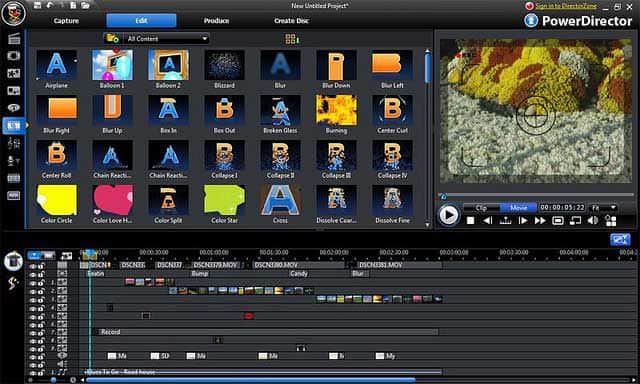
Top 10 Best Free Video Editing Software

Video editing has become more and more popular due to the popularity of camcorders and convenience of online video sharing. To save money, you can use some video editing tools which are free of charge to edit videos. But it may be difficult to find such good program for Windows since nowadays there are too many free video editing programs available on the market. What’s the best choice among them? Let's have a look at the top 10 best free video editing software for Windows below:


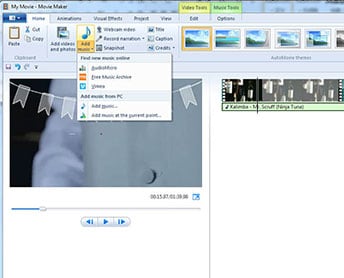
1. Windows Movie Maker
Windows Movie Maker is a free video editing tool for Windows and users can make home movies by simple drag-and-drop. It contains features such as video effects, video transitions, adding titles/credits, audio track, timeline narration, and Auto Movie. What's more, new effects and transitions can be added and existing ones can be modified using XML code.
free video editing software for windows
2. VirtualDub
VirtualDub is a powerful free video editing software for Windows with many amazing features, such as compression, video splitting, and the addition of audio tracks. As a free movie editing software, it has batch-processing capabilities for dealing with large numbers of files and can be extended with third-party video filters.
free video editing software for windows

3. Wax
Wax is a high performance and flexible video editing program which is good for both home users and professionals. It can be used as a stand-alone application, or as a plug-in to other video editors.
However, its video editing functions are quite limited. If you want more advanced video editing features like Mosaic, Jump Cut, Flashhold, or need more transitional effects, picture-in-picture, titles, sound effects, you can turn to Wondershare Filmora (originally Wondershare Video Editor) software, which make your video go to the next level.
free video editing software for windows
4. Avidemux
Avidemux is a free video editor designed for simple cutting, filtering and encoding tasks. It supports various file types, including AVI, DVD compatible MPEG files, MP4 and ASF, using a variety of codecs.
free video editing software for windows
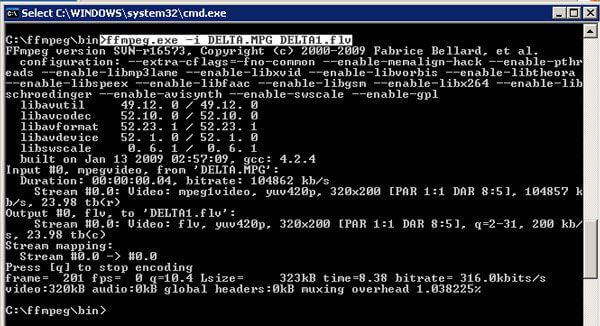
5. FFMpeg
FFmpeg is a paid video editing tool for Windows, but a collection of free software that can record, convert and stream digital audio and video, including libavcodec (a leading audio/video codec library), and libavformat (a leading audio/video container mux and demux library).
free video editing software for windows
6. Blender
Blender is the free open source 3D content creation which supports all major operating systems under the GNU General Public License. Blender has many advanced features, such as modifier-based modeling tools, powerful character animation tools, a node-based material, etc. and is one of the best video editors for both Windows and Mac.
free video editing software for windows
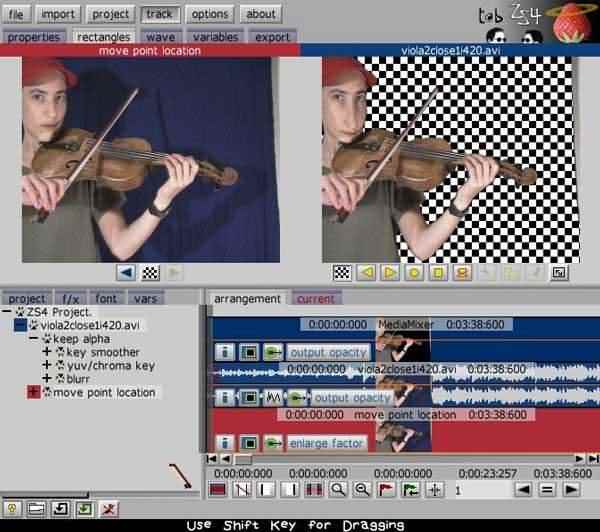
7. ZS4 Video Editor
ZS4 Video Editor is another great free video editing and compositing software that provides media experts with a facility to combine photos, videos and audio files into one or more output files.
free video editing software for windows*
8. Cinefx Jahshaka
Jahshaka is the first OpenSource Realtime Editing and Effects System in the world. With the power of OpenGL and OpenML, it gives users exceptional levels of performance. It currently supports Linux, OS X, Irix and Windows and is considered one of the best free video editor for Windows.
free video editing software for windows
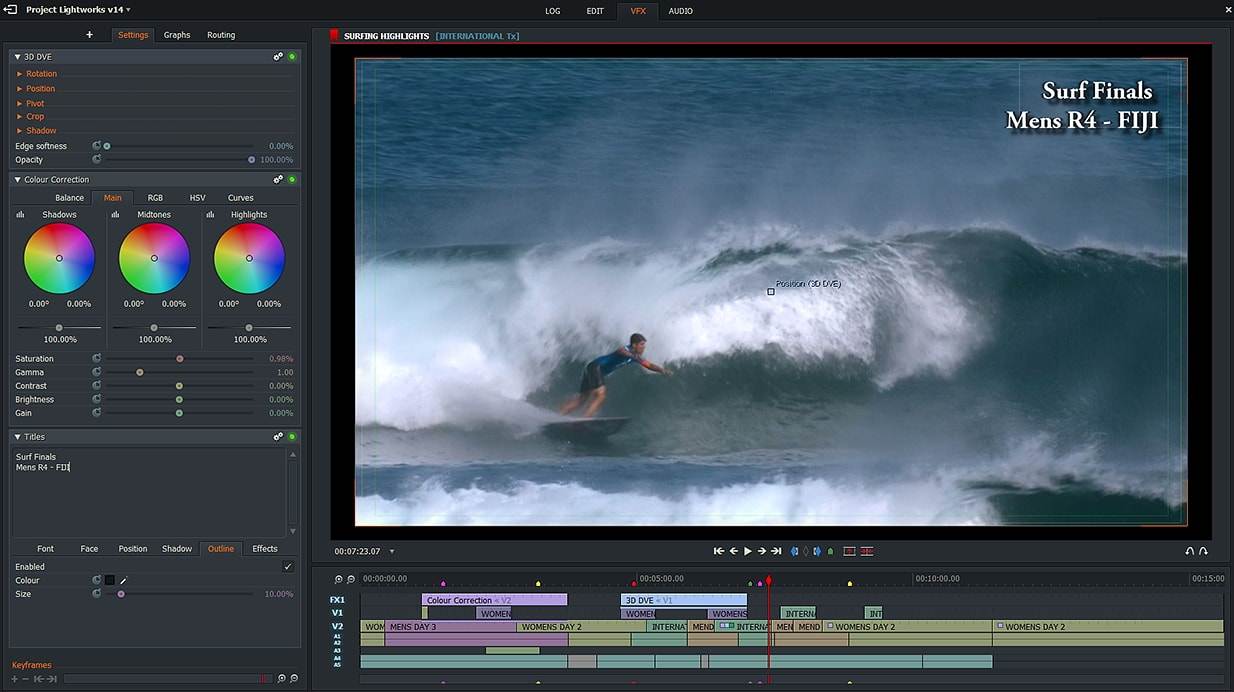
9. Lightworks
Lightworks is a great free video editor featured with many video effects. It can edit up to 256 video, audio, and still image clips. But the user interface is very technical so many people find it hard to use.
free video editing software for windows
10. Movica
Movica uses some fine programs to edit your movies and receives good reputation. The keyboard shortcuts make video editing easier than ever. It's one of the best free video editor for Windows and fully supports WMV, FLV and MPG files.
free video editing software for windows

Monday, 25 July 2016

Windows 10 Anniversary Update Proves Why PCs Aren’t Dead

Microsoft released Windows 10 in the summer of 2015, but unlike previous versions of the operating system, it was meant to be the “final” version of Windows, updated into perpetuity. Now, the company is preparing its first major update available to everyone on August 2.
We spent a few days messing around with all the new stuff in the final update, officially dubbed Windows 10's Anniversary Update. Although it’s not a wholesale overhaul, it definitely brings along a few new tricks you’re going to want. Here are five of the best new features.


Windows Hello can sign into apps and webpages

With Windows 10, Microsoft introduced a new way of logging into your laptop—your face. It’s arguably one of Windows 10’s neatest features (even if most laptops can’t use it). With the Anniversary Update, Microsoft is extending its capabilities by letting you log into certain Windows apps as well. Currently, the feature is restricted to only a handful, like Dropbox and iHeartRadio, but Microsoft says more are coming.
You can also use this feature on the web, but it only works with Microsoft’s Edge browser, which itself is not great. Regardless, Microsoft clearly believes that the future of computer security involves your own beautiful mug shot.


Cortana feels like an actual assistant

Windows 10 was the first major operating system to add virtual assistant to the desktop. A year later, Apple is finally doing the same. With the Anniversary Update, Cortana gets even better. For example (above), you can ask Cortana for directions, and she’ll automatically plot the most efficient route, much like she can already. Only now, she can speak with the Cortana app, available on iOS and Android, and push those directions directly to your phone.

You can also receive texts and phone calls directly on your Windows laptop if you use Android, and you can store information like Frequent Flier numbers and Cortana can recall it whenever you need it.

Cortana also works directly on the lockscreen

Every morning, I wake up and ask Siri what the weather is going to be on my iPad. But it can be an annoying process. Siri has to be plugged into power, and you have to almost scream for her to understand you. Cortana pulls this off much more effortlessly now that she is directly located on the lockscreen. So if your laptop is open, and isn’t even plugged into power, you can ask Cortana the weather, to play music, and set reminders. You can also allow permissions for more sensitive information, like reading back messages.
Along with improved Windows Hello, the Windows 10 lockscreen is getting pretty damn impressive.

Microsoft really wants you to use that pen

The biggest “new” thing about the Anniversary Update is the Windows Ink platform. Before when you’d tap your stylus, it would summon one pre-set app (OneNote by default). Now, it pulls up an entire pen-enabled panel, with access to sticky notes, sketchbook, and screen capture. It also is a quick shortcut to recently used apps and also has an pen-enabled app suggestions, so you can slowly grow your pen’s capabilities.
Apps like sticky notes are also intelligent. If you write, “meeting at 5:30pm” it will schedule the meeting with whatever calendar app you have set as a default.

Edge browser now sucks less with extensions

Although the Edge browser has its strong points, it is still missing some big features when compared with Mozilla Firefox and Google Chrome. But with Anniversary Update, Microsoft is gaining at least one must-have utility—extensions. Now, you can head over to Edge’s settings menu, click Extensions, and choose from curated store of content with extensions like Adblock Plus, Lastpass, Pocket, and Microsoft Translate.
It’s likely not enough to graduate Edge from being just the browser you use to download Chrome, but it’s starting to shape up into some real competition.

Windows Update is a lot of small tweaks, but overall Windows 10 Anniversary Update doubles down on what makes Windows different. It shows PCs are far from dead, and that in fact, there is lots of room to grow.
Microsoft will release the Windows 10 Anniversary Update on August 2nd and is completely free to current Windows 10 users. Starting July 30th, Microsoft will raise the price of Windows 10 from $0 to $120. Best get in on all that free action before it’s too late.

Monday, 18 July 2016

Microsoft admits it’ll miss 1 billion Windows 10 user target on time, blames mobile implosion


Last year, Microsoft confidently announced that it would hit one billion active users on Windows 10 by mid-2018, thanks to expected strong conversions for desktops and laptops, new device sales, and the (supposed) increase that Windows 10 Mobile would deliver to the company’s mobile business. Desktop and laptop conversions have been fairly brisk with the company reporting over 350 million users over the past 11 months.
Unfortunately, Microsoft’s executives were counting on the Windows Mobile business to achieve that initial one billion target by mid-2018, and it’s now clear that’s not going to happen. Windows 10 Mobile is nearly dead — while the OS has its clear fans and adopters, it’s seen virtually no traction from other companies and Microsoft shut downalmost all of the Nokia personnel and assets that it bought from the Finnish company several years ago.

Over at ZDNet, Mary Jo Foley reports that while Microsoft may still bring a Surface Phone to market, it’s almost certainly going to be a business-focused device to highlightContinuum and Microsoft’s other innovations in merging the PC and phone. If it can do that well, Continuum could become a major enterprise feature, in much the same way that great email once defined BlackBerry. That company’s later decline illustrated exactly how relying on a handful of killer features can kill your company as the market evolves and adapts to new technologies.
The full statement from Yusuf Mehdi is as follows:
Windows 10 is off to the hottest start in history with over 350 million monthly active devices, with record customer satisfaction and engagement. We’re pleased with our progress to date, but due to the focusing of our phone hardware business, it will take longer than FY18 for us to reach our goal of 1 billion monthly active devices. In the year ahead, we are excited about usage growth coming from commercial deployments and new devices – and increasing customer delight with Windows.
Overall, Microsoft’s experiment with rolling out Windows 10 to a huge number of devices for free has been a success. The question is whether or not that success was worth the cost to either the larger PC market, which experienced no OS-launch bump and is now in worse shape than ever, or to the goodwill Microsoft created with its customers and trampled on thereafter by aggressively pushing Windows 10 upgrades. When the company set an ambitius goal to reach a billion devices by 2018, some of these pushes made at least marginal sense. Now that it’s acknowledged it’s not going to make them, one has to wonder: What was the point of all the shoving?
Gamers, at least, have shifted to Windows 10 in significant numbers. That OS is now the most frequent appearance on Steam’s Hardware Survey, at 42.94% of the market. Windows 7 64-bit is next, at 30.61%, with Windows 8.1 64-bit at 10.07%.